

The Short Answer
XPEL paint protection film (PPF) is a clear urethane film that takes rock chips, road debris, and bug etching so your paint doesn’t. XPEL Ultimate Plus is 8 mil thick, self-heals minor scratches and swirls, and carries a 10-year XPEL warranty when professionally installed. Ceramic coating does not replace it.
- PPF protects against impact. Ceramic coating protects the finish and makes washing easier.
- For most daily drivers, Full Front coverage is the right place to start.
- Installed at EPP’s Charlotte and Huntersville studios.
You just took delivery of a new car, or you’re about to, and you keep hearing two answers: get it ceramic coated, or get it wrapped in PPF. They sound like the same thing. They aren’t.
At Exclusive Paint Protection, we install XPEL paint protection film at our studios in Charlotte and Huntersville, and the question we hear most is simple: is XPEL PPF worth it? For drivers who want to keep factory paint free of chips, the answer is usually yes. This guide explains what the film actually does, what it doesn’t, and how to decide how much of your car to cover.
What Does XPEL PPF Protect Against?
XPEL PPF protects painted surfaces from physical damage. It is a sacrificial layer: the film takes the hit so the factory paint underneath doesn’t have to. XPEL’s Ultimate Plus film is 8 mil thick with a self-healing top coat, so light swirls and fine scratches fade with heat from the sun or warm water.
- Rock chips from highway driving, gravel, and construction zones
- Road debris that would otherwise break through the clear coat
- Bug splatter etching after long drives
- Light scratches and swirl marks from washing and everyday contact
What Doesn’t PPF Do?
PPF is strong protection, but it has limits. Knowing them up front prevents disappointment later.
- It won’t stop every impact. Large debris, hard hits, and collisions can still damage the film and the paint beneath it.
- It doesn’t replace normal care. Bird droppings, tree sap, and harsh chemicals still need to come off quickly.
- It isn’t permanent. It is a wear layer designed to protect the paint for years, and it can be replaced when it has done its job.
- It won’t hide existing damage. Chips, scratches, or contamination already in the paint will show through, which is why prep matters.
Is PPF the Same as Ceramic Coating?
No. Ceramic coating protects the finish; PPF protects the paint from impact. A ceramic coating adds gloss, makes washing easier, and helps resist water spotting and light chemical staining, but a rock hitting your hood at highway speed will still chip the paint underneath it. Many owners use both: PPF on the high-impact panels and a coating over the film and the rest of the car. XPEL Ultimate Fusion builds a hydrophobic, ceramic-like top coat into the film itself. We compare the two in more detail in PPF vs. ceramic coating.
Who Actually Needs Paint Protection Film?
Not every car needs full-body film. PPF makes the most sense for:
- Daily drivers that spend time on I-77, I-85, or I-485, especially commuters running between Huntersville and Charlotte
- New vehicles with factory paint that hasn’t been chipped yet
- Tesla and other EV owners who want the front end protected soon after delivery
- Performance cars that see spirited driving or track days
- Exotic, limited-production, and collector vehicles
- Owners who plan to keep the car long term and want to avoid repainting
If your main goal is gloss and easier washing, a ceramic coating may be enough. If your concern is chips and preserving factory paint, PPF is the better answer.
Which Parts of a Car Need PPF Most?
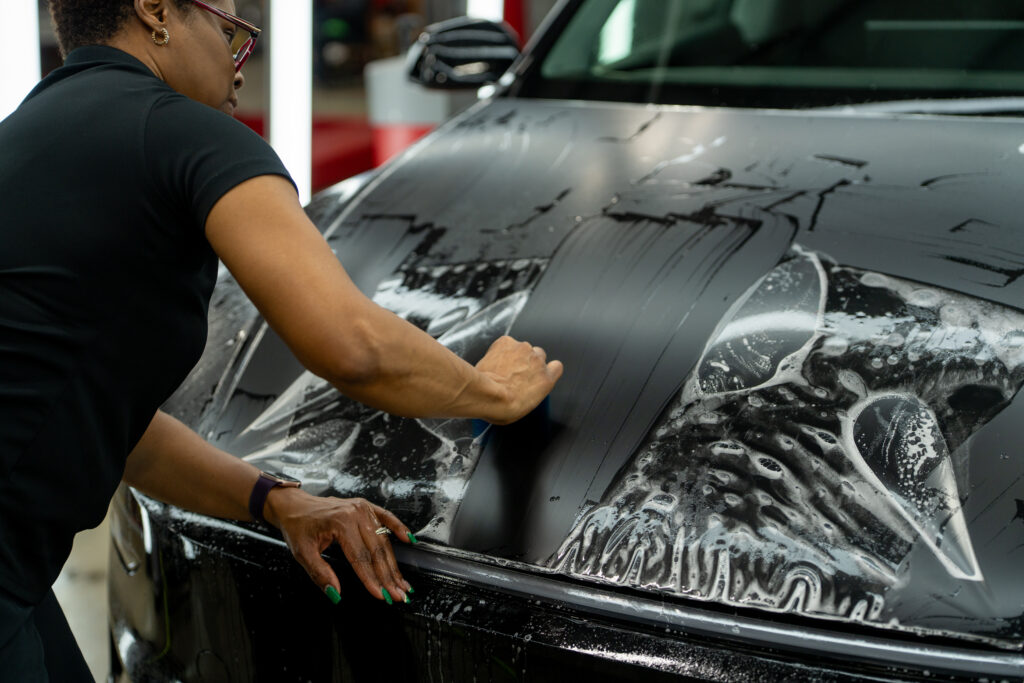
The front of the car takes most of the damage. For most drivers, the highest-risk areas are the front bumper, hood, front fenders, side mirrors, and headlights. That is exactly what XPEL Full Front PPF covers, and it is the most common place to start.
Cars driven hard pick up damage further back: rocker panels, lower doors, and the leading edge of the rear fenders get blasted by debris thrown up at speed. SUVs and EVs with low, wide lower panels see the same thing. Full-vehicle coverage makes sense for exotic and collector cars, or for owners who don’t want any painted panel left exposed.
Which XPEL Film Is Right for You: Ultimate Plus, Ultimate Fusion, or Stealth?
All three are XPEL paint protection films with the same core job: protecting paint from impact. The difference is the surface:
- XPEL Ultimate Plus is a high-gloss film. It keeps the car looking the way it left the factory.
- XPEL Ultimate Fusion adds a hydrophobic top coat, so water beads and rolls off the film the way it does on a ceramic coating. It combines impact protection with easier cleaning in one product.
- XPEL Stealth is a satin film. It gives gloss paint a matte look, and it is the right choice for protecting factory matte or satin paint.
Ultimate Plus and Stealth carry a 10-year XPEL warranty against yellowing, cracking, blistering, and delaminating. The warranty requires installation by an authorized installer and following XPEL’s care instructions. See our XPEL paint protection film page for the full product lineup.
Why Does Installation Quality Matter?
XPEL gives us a trusted film platform. The installation decides whether the result looks factory-clean and lasts. At EPP, every install follows the same steps:
- Consultation. We look at how you drive, where you park, the condition of the paint, and how long you plan to keep the car.
- Surface prep. Decontamination and, where needed, paint correction, so nothing gets sealed under the film.
- Pattern strategy. Pre-cut patterns work on many cars; complex curves and low-volume models need more judgment.
- Installation and edge finishing. Edges are where poor installs fail first, so we wrap and trim them carefully.
- Final inspection. We check for trapped fibers, lifted edges, and anything else before the car goes home.
EPP participates as a select vendor / installer in the XPEL Tesla program, which gives our team regular, hands-on experience with the protection needs of new Tesla owners. If you’re comparing shops, our guide on how to choose a PPF installer covers what to ask.
How Long Does PPF Installation Take?
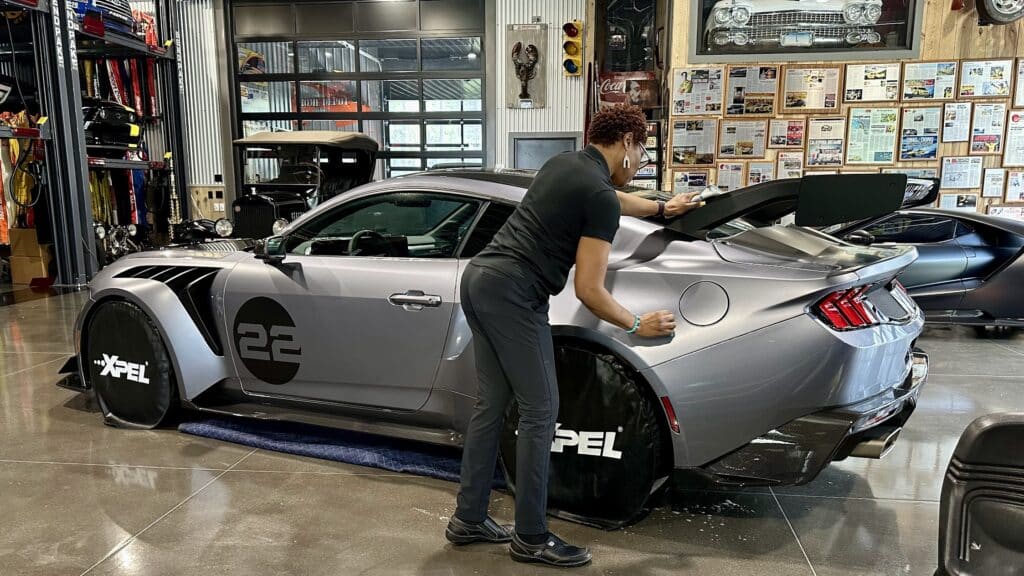
A Full Front installation takes about 2 business days. Full Vehicle coverage takes 5 to 7 business days. The extra time goes into prep, fitting, and edge work, which is what keeps the film looking right for years.
How Do You Choose the Right Coverage?
- Daily driver: Full Front usually gives the best value, because it covers the panels that take the most hits.
- Weekend or track car: Full Front plus rocker panels, lower doors, and rear impact areas fits how the car is actually used.
- Exotic, collector, or long-term keeper: Full Vehicle coverage, so every painted panel stays original.
The best PPF package isn’t the most expensive one. It’s the one that matches how your car is driven, parked, and cared for. For what affects the price, see how much paint protection film costs.
Not sure how much coverage you need?
Book a consultation at our Charlotte or Huntersville studio.
Frequently Asked Questions
Is XPEL PPF worth it on a daily driver?
Usually, yes. Daily drivers take the most front-end abuse, especially on I-77, I-85, and I-485. XPEL Full Front coverage protects the bumper, hood, fenders, mirrors, and headlights, which is where most rock chips happen.
How long does XPEL paint protection film last?
XPEL Ultimate Plus and Stealth carry a 10-year XPEL warranty against yellowing, cracking, blistering, and delaminating when installed by an authorized installer and cared for as directed. Real-world life also depends on how the car is driven, parked, and washed.
Should I protect the whole car or just the front?
For most owners, Full Front gives the best value because that is where most impact damage happens. Full Vehicle coverage makes more sense for exotic and collector cars, or for owners who want every painted panel protected.
When is the best time to install PPF on a new car?
As soon as possible after delivery, before the paint picks up its first chips. Film protects paint going forward; it does not repair damage that is already there.
Can you put ceramic coating over PPF?
Yes. Many owners coat over the film for easier washing and better water behavior. Another option is XPEL Ultimate Fusion, a PPF with a built-in hydrophobic top coat that gives film the water-beading behavior of a ceramic coating.