
Who doesn’t love driving down a beautiful road on a sunny day? Your car becomes an observation deck, and there is so much to admire and appreciate outside.
One problem.
All of those warm, sunny rays are beating on your skin, and potentially causing permanent damage. If you have a specific medical condition that makes you particularly sensitive to the sunlight, the danger and discomfort is even more acute.
Good news: There is a solution.
A premium window tint or film not only adds privacy and style to your vehicle, but will also protect you and your car’s passengers from harmful UV rays.
What does a premium window tint do?
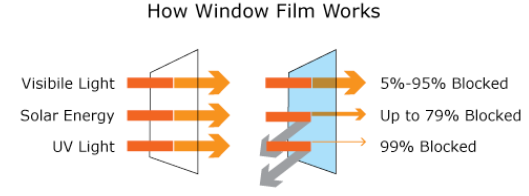
When most people think of window tint, they think of privacy or style. In reality, a premium window tint adds so much more. As it relates to the sun, window tint does three things: First, it blocks a certain percentage of visible light. Second, it blocks a certain percentage of solar energy (i.e., heat). Third, it blocks UV rays. The performance of a window tint in each of these categories depends on what type of film you choose.
What are the medical benefits of a premium window tint? Photosensitivity and Skin Cancer
All three of these performance features have specific medical benefits. If you have certain medical ailments, such as Cockayen’s and Bloom’s syndromes, pellagra, protoporphyria, or xeroderma pigmentosum, you have particularly high photosensitivity. Several medications also make individuals more sensitive to light. We also have experience tinting windows for people who suffer from severe migraines that can be brought on from prolonged exposure to bright light or sun light.
Even if you do not have high photosensitivity, your skin is still susceptible to damage from UV rays. As the Skin Cancer Foundation states, “Nearly 53 percent of skin cancers in the US occur on the left, or drivers’, side of the body…. The distribution pattern supports the theory that automobile drivers in the US are exposed to more ultraviolet (UV) radiation on the left, through the driver’s side window, and that ultraviolet A (UVA) radiation causes more damage than formerly believed.” Unless you plan to apply sunscreen every time you get in your car, a good window tint could save you a whole lot of pain and money by lowering the risk of skin cancer.
Obtaining a Medical Window Tint Exemption
In North Carolina the general legal limit for window tint is 35% VLT (Visible Light Transmission). On trucks and SUVs all windows except the driver’s, front passenger’s, and windshield can be tinted as dark as you like, but the front two must still obey the 35% limit.
However, in some cases a medical condition can exempt you from that rule, allowing you tint your windows as dark as 20% and you windshield as dark as 70%. Medical exemption permits are usually granted to those who suffer from ailments that cause high photosensitivity, such as those listed above; and people who are on medications that make them sensitive to light.
If you have photosensitivity issues, you can apply for a window tint exemption by filling out a NC “Tinted Window Waiver Application Form.” You will need to consult first with your physician, and your he or she will need to sign your waiver application.
When a permit is granted the vehicle owner receives a sticker to be placed on the back glass between the window film and the glass, notifying any law enforcement official or safety inspection personnel that this vehicle is exempt from the general Visible Light Transmission limit.
Window Tint on an SUV with Medical Exemption
The Ford Explorer shown below is a good example of how we approach medical exemption builds. For the side and rear windows, we install XPEL PRIME XR, a nano-ceramic film that delivers strong infrared heat rejection, excellent optical clarity, and blocks 99% of harmful UV radiation. For clients who need maximum darkness within the medical exemption limits, XPEL PRIME XR handles glare reduction and solar energy rejection without the hazy or reflective look of older dyed films.
For the windshield, we use XPEL PRIME XR PLUS with our clear ceramic windshield add-on. It is virtually transparent, maintaining full forward visibility while reducing solar energy transmission and blocking 99% of UV radiation. This protects your skin, eyes, and interior materials without any visible tint on the glass.
Both films are engineered to perform at the level a medical exemption situation demands: maximum UV protection, meaningful heat rejection, and a clean appearance that does not draw unnecessary attention.