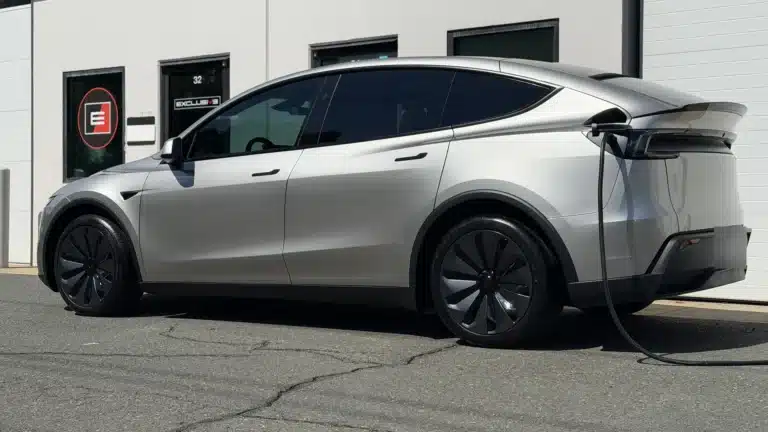


Charlotte-area Tesla owners are feeling the difference this week.
With the Charlotte region facing near-record and record-territory heat around the Fourth of July weekend, cabin comfort is no longer just a convenience issue. WBTV reported daily highs reaching the upper 90s to 100 degrees, putting Charlotte into record territory Friday and Saturday, with feels-like temperatures approaching 105 degrees. The National Weather Service also listed a Heat Advisory for Charlotte on July 4, with a forecast high near 100 and heat index values as high as 107.
For Tesla owners, that kind of weather makes window tint more than an appearance decision.
A Tesla’s glass area is one of the things owners love about the vehicle. The open cabin, large windshield, side glass, panoramic roof design, and bright interior experience all contribute to the vehicle’s appeal. But during Charlotte summer heat, that same glass area can also contribute to cabin heat, glare, interior surface temperature, and daily comfort issues.
That is where XPEL PRIME XR PLUS becomes a serious consideration.
At Exclusive Paint Protection, or EPP, we look at Tesla window tint as part of a larger preservation strategy: protecting the ownership experience before heat, glare, UV exposure, and daily driving discomfort become routine.
Why Tesla Owners Notice Heat So Quickly
Many Tesla owners in Charlotte, Lake Norman, Huntersville, Cornelius, Davidson, Ballantyne, and South Charlotte spend time in traffic, park outside during the day, or commute on I-77 and I-485. When the vehicle sits in direct sun, the glass becomes one of the most important areas to address.
Tint will not replace air conditioning, cabin preconditioning, or basic heat safety. It also does not make it safe to leave a child, pet, or anyone vulnerable inside a parked vehicle. During periods of extreme heat, WBTV specifically warned drivers not to leave children or pets inside parked vehicles.
What the right tint can do is help reduce the solar load entering the cabin, improve comfort while driving, reduce glare, and help preserve the interior over time.
What Makes XPEL PRIME XR PLUS Different?
Not all tint performs the same.
A common mistake is assuming darker tint automatically means better heat rejection. Darkness affects visible light. Heat rejection depends on the film’s construction and performance.
XPEL PRIME XR PLUS is XPEL’s high-performance automotive window film option for drivers who want heat rejection, UV protection, and clarity without relying only on a darker appearance. According to XPEL’s USA specification sheet, XR PLUS films are rated at 99% UV rejection, with TSER ratings ranging from 52% to 71% depending on shade, and IR rejection at 1025nm listed from 92% to 96% across XR PLUS shade options.
For a Tesla owner, those numbers matter because the goal is not just to make the vehicle look darker. The goal is to make the cabin more comfortable while preserving visibility, appearance, and daily usability.
Tesla Window Tinting at EPP
XPEL PRIME XR PLUS shades and packages for Model 3, Y, S, X and Cybertruck.
Why PRIME XR PLUS Makes Sense for Charlotte Heat
During a normal Charlotte summer, heat and humidity are already part of daily driving. During a record-setting or near-record heat stretch, the difference becomes more noticeable.
XPEL PRIME XR PLUS is especially valuable for Tesla owners who:
Drive during midday heat.
Park outside at work, shopping centers, dealerships, or home.
Commute between Lake Norman and Charlotte.
Want reduced glare without compromising visibility.
Care about protecting interior surfaces from UV exposure.
Want performance from the film, not just a darker look.
For many Tesla owners, ceramic tint is one of the first upgrades that changes the day-to-day experience of the vehicle. It is not as visible as paint protection film, and it may not be as dramatic as a ceramic coating after a wash, but every hot day reminds you why it matters.
Tesla Model Y, Model 3, Model S, Model X, and Cybertruck Tint Considerations
Each Tesla model has its own glass layout, cabin-comfort concerns, and visibility considerations.
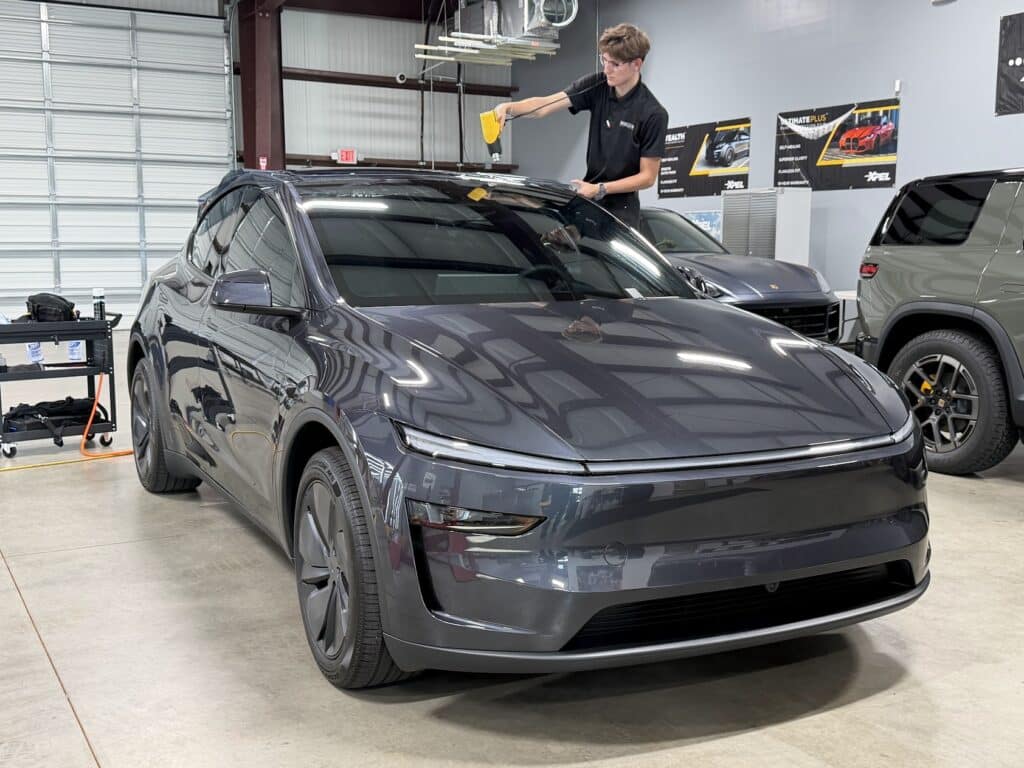
The Model Y and Model 3 are especially common in the Charlotte area, and owners often ask about side windows, rear glass, windshield comfort, and roof-glass heat. The Model S and Model X bring their own visibility and glass-area considerations, especially for owners who spend more time on highway drives or park outside for long periods.
Cybertruck adds another layer to the conversation. Its large glass surfaces, upright windshield, angular cabin design, and high-visibility profile make heat rejection, glare control, and optical clarity especially important. For Cybertruck owners in Charlotte, XPEL PRIME XR PLUS can help manage cabin comfort without relying only on a darker appearance.
At EPP, the right recommendation depends on the specific Tesla, how it is used, where it is parked, how much heat rejection the owner wants, and how important nighttime visibility is to the driver.
This is also where legal and inspection considerations matter. North Carolina law states that windshield tint may only be applied along the top of the windshield and may not extend more than five inches below the top of the windshield or below the AS1 line, whichever measurement is longer. The law also lists light transmission and reflectance requirements for other windows.
Because tint laws, inspection requirements, and visibility concerns can affect the final recommendation, EPP helps owners choose window film with both performance and compliance in mind.
Why Installation Quality Still Matters
XPEL gives EPP a trusted product platform. The film matters, but the installation process determines how that film is delivered on the vehicle.
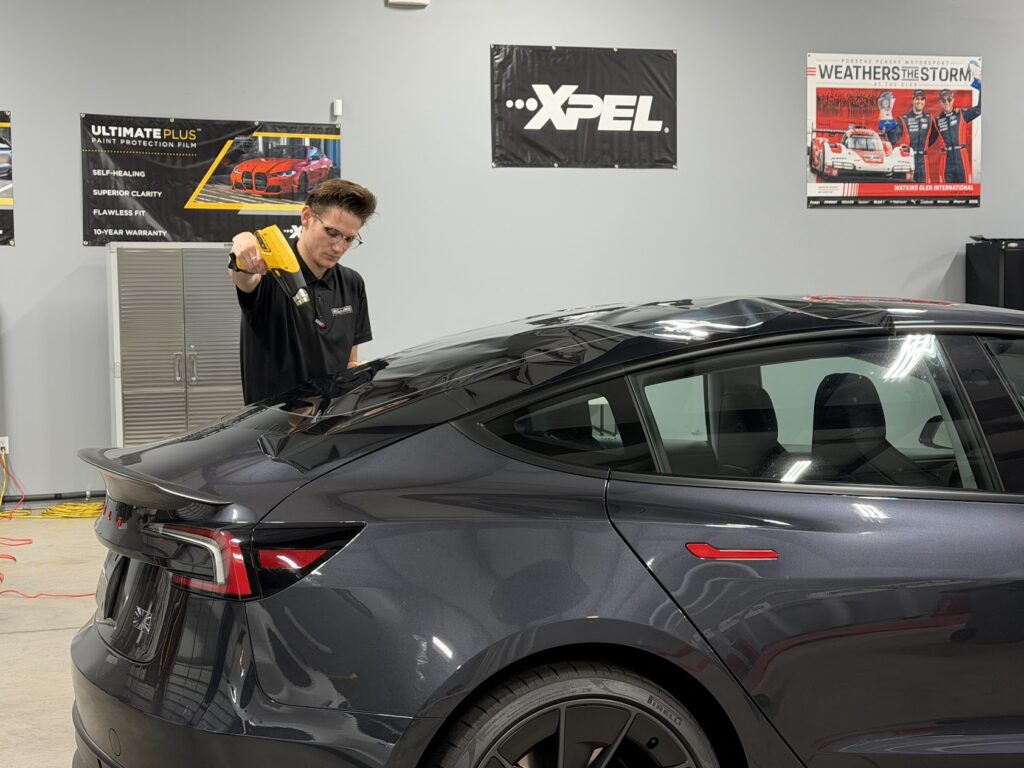
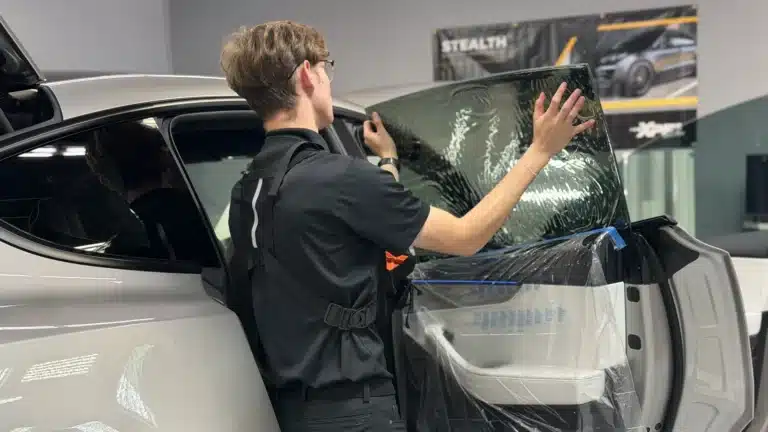
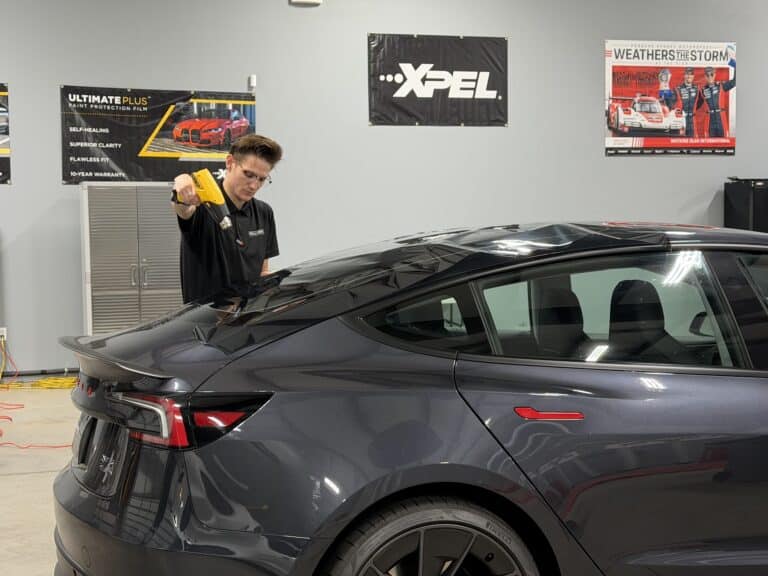
Tesla glass requires clean preparation, careful handling, proper patterning, and attention to the customer experience during curing. A quality tint installation should account for the shape of the glass, electronics, trim sensitivity, visibility, and the temporary appearance changes that can happen while the film cures.
That is why choosing the right installer matters as much as choosing the right film.
EPP participates as a select vendor / installer in the XPEL Tesla and Rivian programs, giving our team direct experience with the protection needs of modern EV owners and the expectations that come with new-vehicle ownership. For Tesla clients, that experience supports better conversations around tint, paint protection film, coatings, windshield considerations, and early protection planning.
How to Think About Your Tesla Tint Package
Choose XPEL PRIME XR PLUS if your main priority is high heat rejection, UV protection, optical clarity, and comfort during Charlotte summer driving.
Choose a lighter shade if visibility, a cleaner factory look, or legal considerations are your priority.
Choose a darker shade where appropriate if glare reduction, privacy, and appearance matter more, while still balancing visibility and current North Carolina requirements.
Consider pairing tint with XPEL paint protection film if your Tesla is new, frequently driven on highways, or exposed to road debris. Tint helps manage the cabin experience. PPF helps protect painted surfaces from physical impact. Ceramic coating can then help with gloss, washing, and environmental resistance.
These services do different jobs, and the best protection plan usually comes from understanding how the vehicle will actually be used.
FAQs About Tesla Window Tint in Charlotte
Is XPEL PRIME XR PLUS worth it for a Tesla?
For many Tesla owners in Charlotte, yes. The value is strongest when the vehicle is parked outside, driven during peak heat, or used for regular commuting. PRIME XR PLUS is designed for high heat rejection, UV protection, and comfort without depending only on a dark appearance.
Does darker tint mean better heat rejection?
Not necessarily. A darker film can reduce visible light and glare, but heat rejection depends on the film technology. This is why a high-performance ceramic film like XPEL PRIME XR PLUS can be a better choice than simply choosing the darkest legal option.
Should Cybertruck owners consider XPEL PRIME XR PLUS?
Yes, especially if the vehicle is regularly parked outside or driven during peak Charlotte heat. Cybertruck’s large glass surfaces and upright windshield make heat rejection, glare control, and optical clarity important considerations. XPEL PRIME XR PLUS gives Cybertruck owners a performance-based tint option without relying only on a darker appearance.
Will window tint keep my Tesla completely cool?
No. Window tint helps reduce heat entering through the glass, but it does not eliminate heat, replace air conditioning, or make a parked vehicle safe for people or pets. During extreme Charlotte heat, cabin safety still depends on responsible vehicle use, air conditioning, preconditioning, and never leaving children or pets inside a parked vehicle.
Can I tint the windshield on my Tesla?
Windshield tint requires careful discussion because North Carolina has specific restrictions on windshield tint placement. EPP can walk through the current requirements, visibility considerations, and available options before recommending a setup.
Should I tint my Tesla before or after PPF?
Tint and PPF protect different parts of the ownership experience. Tint improves cabin comfort, glare reduction, and UV protection. PPF protects painted surfaces from road debris and impact damage. For a new Tesla, both are worth discussing early, before daily driving and summer heat become part of the vehicle’s routine.
Protect the Tesla Ownership Experience
A Tesla should feel calm, comfortable, and refined to drive, even when Charlotte weather is working against it.
XPEL PRIME XR PLUS helps Tesla owners address one of the most noticeable issues of summer ownership: heat through the glass. When paired with the right consultation and installation process, it becomes more than a tint upgrade. It becomes part of preserving the experience of the vehicle.
For Tesla window tint in Charlotte, Lake Norman, Huntersville, or the surrounding Carolinas, Exclusive Paint Protection can help you choose the right XPEL PRIME XR PLUS configuration based on your vehicle, your driving habits, your visibility preferences, and your protection goals.
For the Good of Your Car.