
Melanoma, also known as Malignant Melanoma, is the most serious type of skin cancer and one of the fastest-growing cancer diagnoses in the United States. According to the American Cancer Society’s 2026 Cancer Facts and Figures, an estimated 112,000 new invasive melanoma cases will be diagnosed this year, with approximately 8,510 deaths from the disease. That represents a significant increase from the 73,870 cases predicted in 2015 when this article was first published. Experts estimate that roughly 90% of all melanoma diagnoses are linked to ultraviolet (UV) exposure, making prevention strategies critically important.
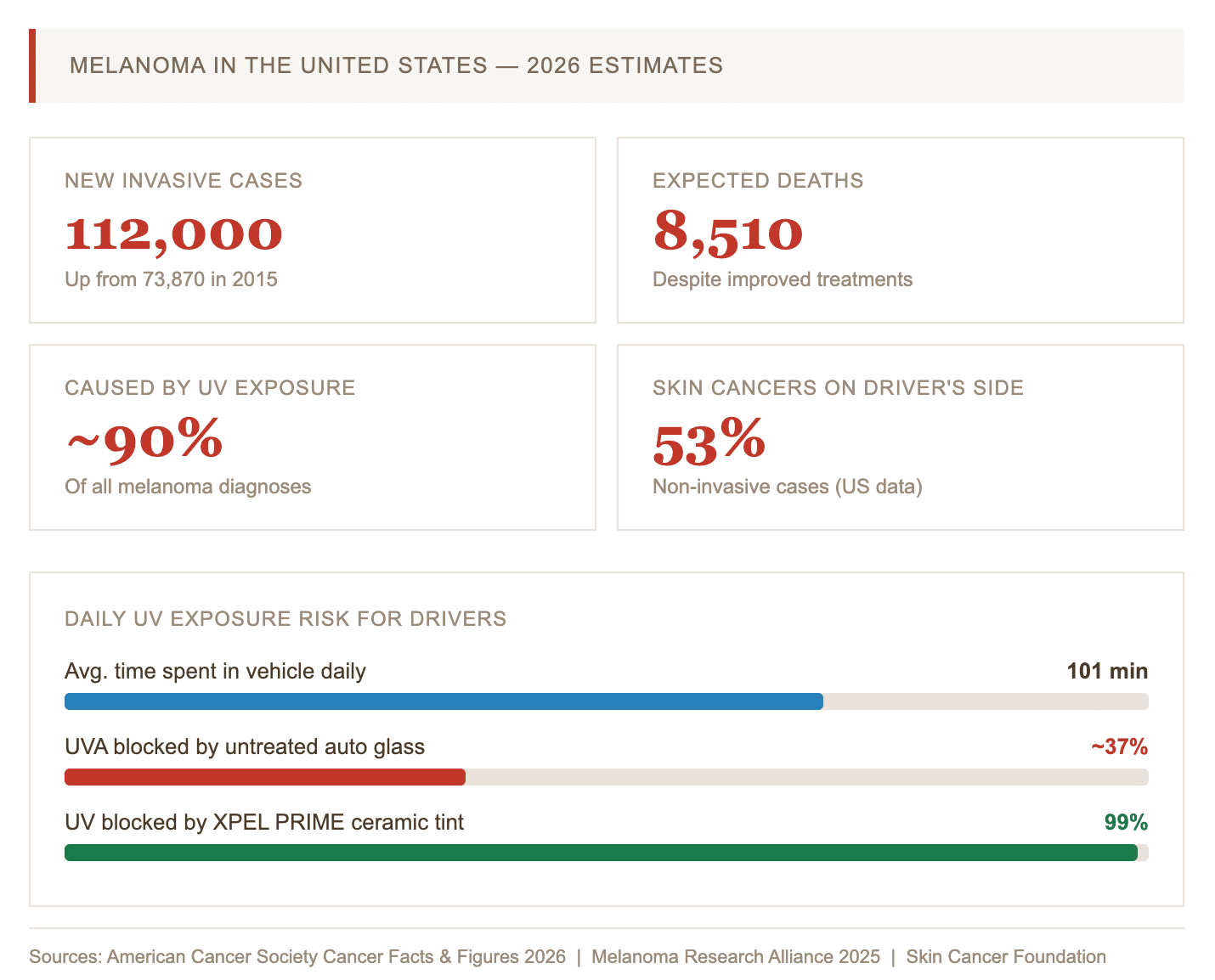
Symptoms of Melanoma are lumps on and darkening of the skin. These lumps are tumors of melanin-forming cells and can appear anywhere on the body. Melanoma is medically treatable with methods such as wide local excision, Moh’s surgery, radiation therapy, and skin grafting and prescriptions such as Interferon alfa-2b by injection, Vemurafenib, and Dabrafenib. When patients are diagnosed with Melanoma, doctors also recommend lifestyle changes to reduce UV exposure that can include the use of SPF 30+ sunscreen and the tinting of home and vehicle windows. These lifestyle changes can also be used by non-patients as preventative methods. The tinting of your vehicle’s windows is an especially important method of prevention and management, as 74% of all non-invasive Melanoma skin cancer cases are found on the driver’s side of the body. Similar percentages are found in the UK and Australia where drivers are on the right side of the vehicle. Five minutes of sun exposure provides the maximum amount of vitamin D your body can absorb, and the average American spends 101 minutes on the road each day.
Does Window Tint Prevent Skin Cancer?
This is the question most people arrive at this page asking, so let’s answer it directly.
Window tint cannot guarantee you will never develop skin cancer. But it significantly reduces your exposure to the UV radiation that causes it, particularly UVA rays, which account for roughly 90% of the sun’s most damaging radiation and are present all day, every year, regardless of cloud cover or season.
Standard automotive glass blocks most UVB rays but allows a substantial portion of UVA rays through. A quality window film changes that equation. Premium ceramic films like XPEL PRIME XR and XPEL PRIME XR PLUS block 99% of UV radiation across both UVA and UVB spectrums, and carry the Skin Cancer Foundation’s seal of recommendation.
Consider the numbers: the average American spends 101 minutes in a vehicle daily. Across a full year, that adds up to over 600 hours of potential UV exposure through your car windows. For a daily commuter without window tint, that is a meaningful and preventable risk. The Skin Cancer Foundation’s own data shows that nearly 53% of skin cancers in the US occur on the left, or driver’s, side of the body, directly supporting the connection between vehicle UV exposure and skin cancer risk.
So does window tint prevent skin cancer? It cannot offer a guarantee. But the evidence strongly supports it as one of the most practical and consistent UV protection measures available to drivers.
One common misconception about window tinting is that the film is always dark. Although the North Carolina VLT (visible light transmission) limit is 35%, you can always opt for a lighter film. XPEL PRIME XR PLUS, for example, is available in nearly transparent shades that allow high visible light transmission while still rejecting significant solar energy and blocking 99% of UV radiation. These films offer the same UV protection as darker counterparts without altering the appearance of the vehicle, and carry the Skin Cancer Foundation’s seal of recommendation. When driving, harmful UV rays enter the vehicle from all windows. UVA rays account for 90% of the sun’s most damaging rays and are present all day, every day of the year. Because very light films are virtually undetectable, it is legal to apply them to the windshield also, effectively providing UV protection across the entire vehicle cabin.
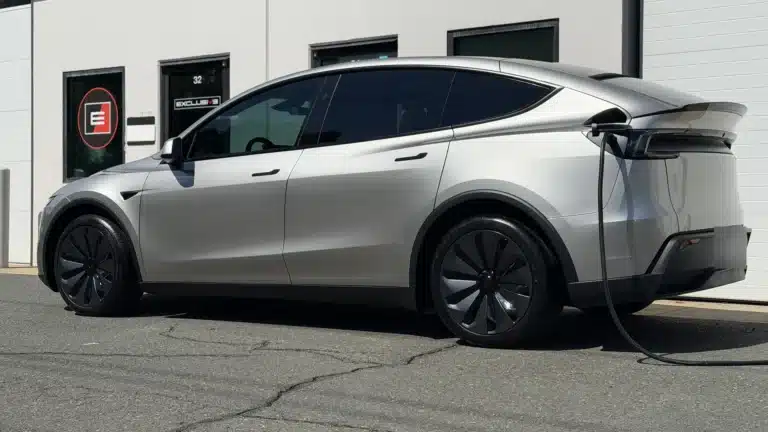
This Tesla Model S has XPEL PRIME XR PLUS applied to all its windows, including the windshield, for full-cabin UV protection.