
The first rock chip usually happens within 200 miles.
Not because the owner was careless. Not because they took it on a dirt road or drove it in a hailstorm. Just a normal stretch of highway, a truck two cars ahead, and a piece of gravel moving at 70 miles per hour. By the time you see it in your rear view mirror, the damage is already done. A small white scar on the hood of a car that cost more than most houses.
On a Ferrari 812 Superfast, that scar isn’t just cosmetic. It’s the beginning of a much more expensive problem.
The Ferrari 812 Superfast Is Built for Speed. Its Paint Wasn’t Built for the Road.
The 812 Superfast is Ferrari’s last front-engine, naturally aspirated V12 grand tourer. 789 horsepower. A 6.5-liter engine that redlines past 8,900 RPM. A car that can reach 60 miles per hour in under three seconds and top out at 211 mph. It is, by almost any measure, one of the greatest road cars ever built.
And its paint is remarkably thin.
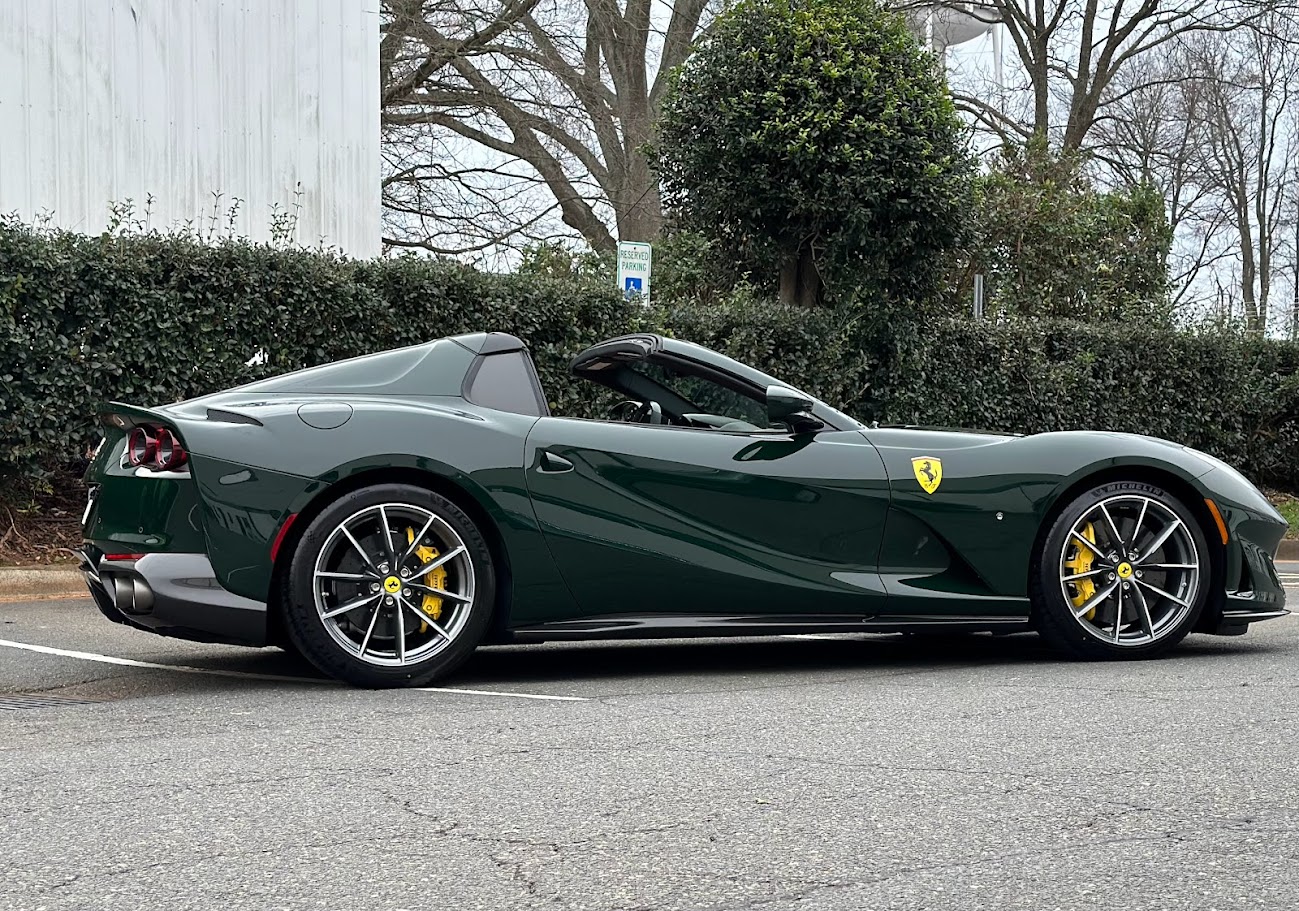
Ferrari applies high-quality, meticulously color-matched paint at the Maranello factory. Colors like Verde British, Rosso Corsa, and Blu Tour de France are mixed to exact specifications and laid down by hand in the kind of controlled environment most automotive manufacturers can’t match. The result is paint with exceptional depth, clarity, and color saturation.
What it isn’t is thick. And thin paint, on a low, wide, front-engine car traveling at speed, is paint that gets damaged.
What the Road Actually Does to Unprotected Ferrari Paint
Rock Chips and Road Debris
The 812’s front end sits close to the road. The wide stance and aggressive aerodynamics channel airflow in ways that pull road debris directly toward the hood, front bumper, and fenders. At highway speeds, stones and gravel don’t bounce harmlessly off the surface. They hit with enough force to break through the clear coat and expose the base paint beneath.
One chip is a cosmetic issue. A cluster of chips across the hood is a structural one. Once the clear coat is breached, moisture, road salt, and UV radiation begin working on the exposed paint underneath. Left untreated, small chips become areas of oxidation. Oxidation spreads.
Ferrari paint repair is not cheap or simple. Matching the factory color on a specialty finish like Verde British requires Ferrari-certified paint codes, specialized equipment, and a technician who understands how the original color was applied. A single panel respray on an 812 can run anywhere from $3,000 to $8,000 depending on the panel, the color complexity, and the shop performing the work.
And that’s if you catch it early.
UV Oxidation and Color Fade
The 812 Superfast’s V12 engine produces extraordinary power. It also produces heat, and the car’s design channels that heat through vents and surfaces across the rear of the vehicle. Combined with North Carolina’s year-round sun exposure, unprotected paint on an 812 faces significant UV stress.
Ferrari’s deeper, more saturated colors are particularly vulnerable. The same pigments that give Verde British its richness and depth oxidize faster under sustained UV exposure than standard automotive finishes. The process is gradual enough that most owners don’t notice until the paint has already lost noticeable depth and clarity. By that point, paint correction can partially restore the surface, but the original factory finish is gone.
Bug Splatter and Chemical Etching
At the speeds the 812 is designed to travel, insect impacts aren’t minor. Bug splatter contains acidic compounds that begin etching into clear coat within hours of contact, especially in heat. Bird droppings are worse, with pH levels that can permanently etch paint within a single afternoon of sitting in the sun.
On a daily driver, this kind of contamination is manageable with regular washing. On a car that gets driven occasionally and stored between outings, contamination that sits for days or weeks causes damage that no amount of polishing can fully reverse.
The Resale Consequence
This is where unprotected paint becomes a financial issue that goes beyond the repair bill.
The Ferrari 812 Superfast was produced in limited numbers. Factory-original paint in documented, unrepainted condition is one of the primary factors that determines value at resale or auction. A single repainted panel, no matter how well executed, shows up under inspection lighting and in a paint thickness gauge reading. Buyers and auction houses price it accordingly.
A Ferrari with documented PPF installation from new tells a completely different story. The paint beneath is untouched. The film absorbed the damage instead. When the film is removed, the factory finish underneath is exactly as it left Maranello.
What XPEL Ultimate Plus Does for the Ferrari 812 Superfast
Paint Protection Film is not a new technology. What has changed is the quality of the film and the precision of the installation.
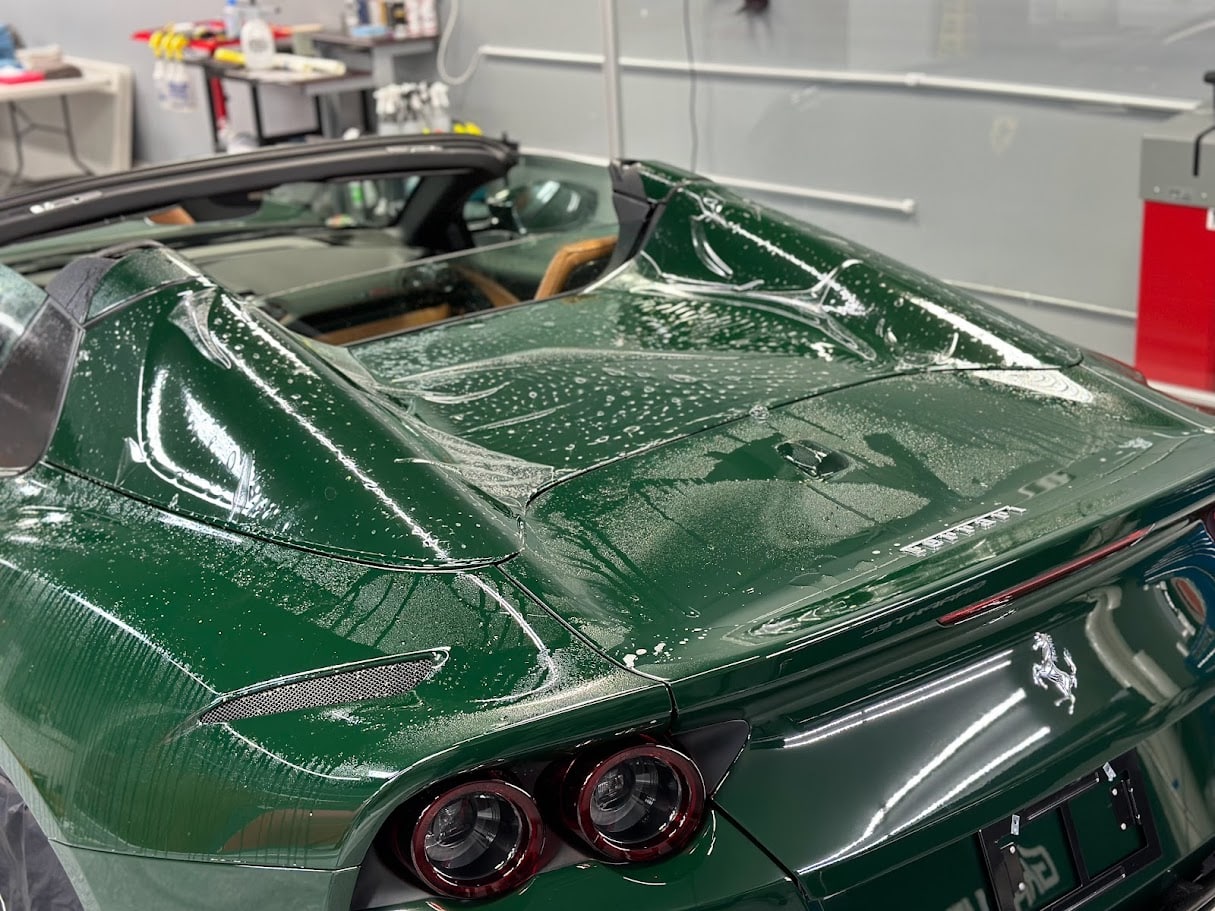
XPEL Ultimate Plus is the film we install on the 812 Superfast at Exclusive Paint Protection. It sits at approximately 8 mils thick, forms a clear, optically transparent barrier over the factory finish, and absorbs the energy of rock chips and road debris before they reach the paint. When light scratches occur in the film itself, XPEL’s self-healing topcoat closes them with heat exposure from sunlight or warm water.
The 10-year transferable manufacturer warranty covers yellowing, bubbling, cracking, and peeling. On a car that will likely appreciate in value over time, a transferable warranty is documentation that the protection was installed correctly and has been maintained to standard.
For clients who want hydrophobic performance built directly into the film, we also install XPEL Ultimate Fusion, which integrates a ceramic coating into the topcoat natively. Water, road contamination, and bug splatter bead and roll off the surface rather than sitting on it.
The 812’s Most Vulnerable Areas
Not every panel carries equal risk. Here’s where unprotected 812s accumulate damage fastest:
Full hood and front bumper: The most exposed surface on the car. Every mile of highway driving sends debris directly at this panel. On a Verde British or similarly saturated color, even minor chipping is visible and immediately impacts the car’s appearance.
Front fenders: The 812’s wide stance puts the fenders in the direct path of road spray and debris from the front tires. Chips cluster along the lower fender edges in a pattern that’s immediately recognizable to anyone who inspects the car.
Rear engine cover and vents: The 812’s rear engine cover is one of the most visually striking elements of the car and one of the most difficult areas to film correctly. Compound curves, intake geometry, and tight transitions require a controlled wet installation and an installer with specific experience on this platform.
Rear diffuser: The aerodynamic diffuser at the rear of the 812 is constantly exposed to road debris thrown up at speed. It’s also one of the most complex areas for film application, requiring scissor lift access and specialized lighting to cover every vent and material transition properly.
Carbon fiber elements: The 812 Superfast features exposed carbon fiber components including splitters and rear diffuser sections. Carbon fiber is expensive to repair and nearly impossible to match if damaged. PPF on these surfaces isn’t optional for owners who want to preserve the car’s condition.
What a Proper Installation Looks Like
The 812 Superfast we protected at our Huntersville studio arrived with 47 miles on the odometer. Verde British paint. Factory-perfect condition. The owner wanted it to stay that way.
Before a single piece of film was laid, the car went through a full multi-stage decontamination: pH-balanced hand wash, clay bar treatment to remove embedded particles, detailed inspection under specialized lighting, paint enhancement polishing to address any minor defects, and final alcohol-based decontamination to strip waxes and oils from the surface.
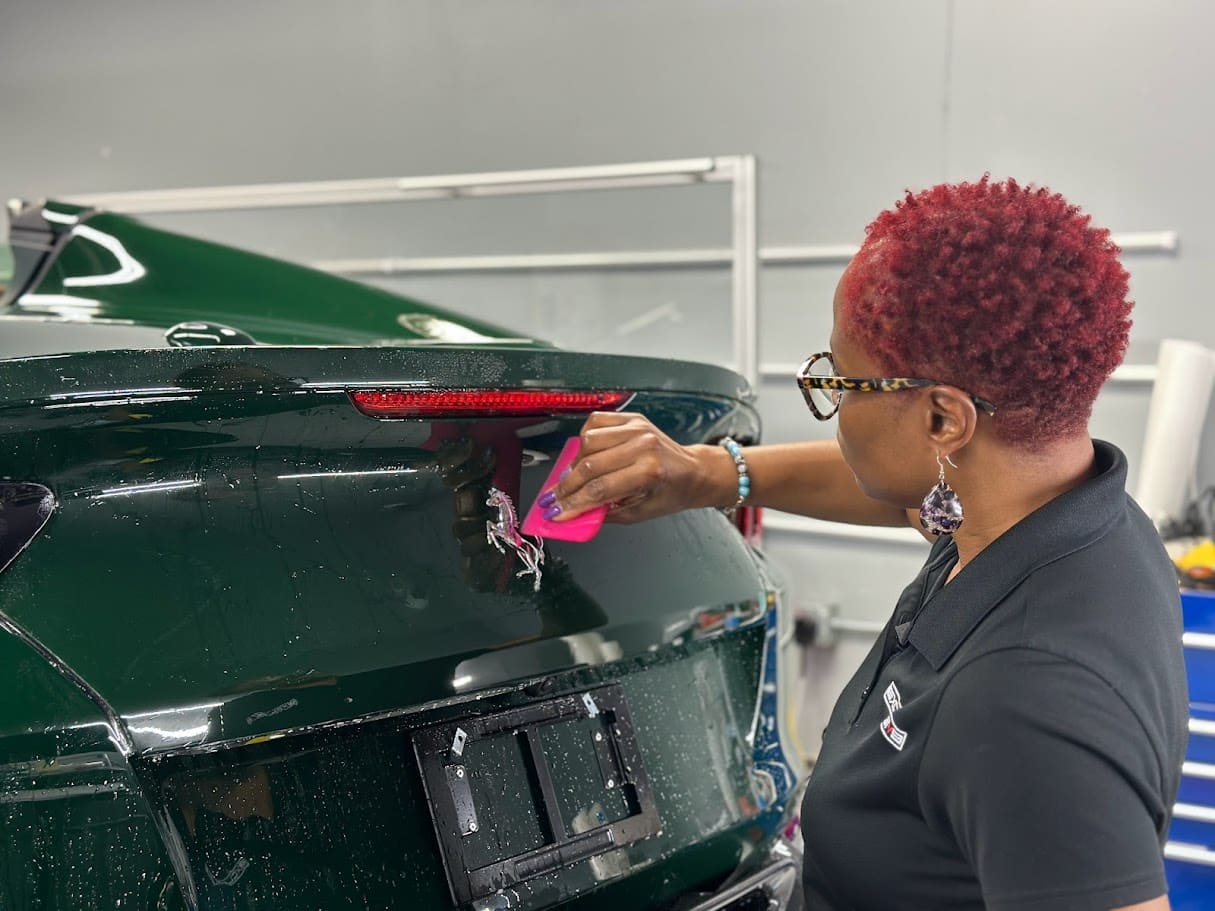
We then applied XPEL Ultimate Plus across the full vehicle using XPEL’s DAP precision-cut patterns for the 812 platform. The rear engine cover was handled with a controlled wet installation technique. The rear diffuser was accessed on scissor lifts with full lighting coverage. Every edge was wrapped rather than cut at panel transitions. The Prancing Horse emblems were precision-cut and hand-fitted around to preserve their appearance while protecting the surrounding paint.
XPEL Fusion Plus Ceramic Coating was applied over the full film installation and to the wheels and Brembo brake calipers. The car left our shop with every painted surface protected, every vulnerable area covered, and factory paint that will look exactly the same whether it’s driven 1,000 miles from now or 10,000.
Protecting Your Ferrari 812 Superfast in Charlotte and Lake Norman
Exclusive Paint Protection is an XPEL-certified studio with locations serving Charlotte, Huntersville, and the Lake Norman area. We have protected Ferraris, Lamborghinis, McLarens, Porsches, and other exotic vehicles across every generation, and our installation process is built specifically for the standard these cars demand.
If you own a Ferrari 812 Superfast and want to discuss protection options before the road gets involved, call us at 704-525-5225 or book a consultation. We’ll assess your specific vehicle, walk through coverage options, and give you an honest recommendation based on how you drive and store the car.
The 812 Superfast is one of the last great naturally aspirated V12 Ferraris. It deserves to stay exactly the way Ferrari built it.